
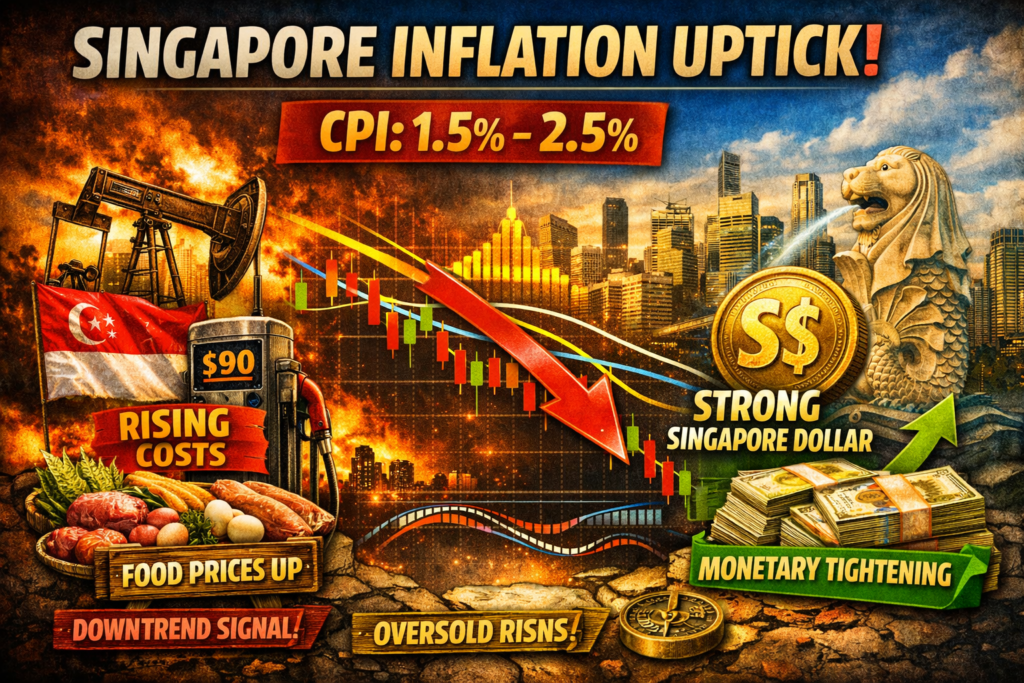
DBS Group Research is flagging a near-term inflation uptick in Singapore’s CPI, driven mainly by a global energy shock linked to Middle East tensions.
🔥 Key forecast from DBS
DBS expects:
- Core inflation: ~1.6% YoY (up from 1.4%)
- Headline CPI: ~1.8% YoY (up from 1.2%)
This suggests a clear acceleration in price pressures for March 2026 data. (FXStreet)
🛢️ What’s driving the CPI spike?
The main transmission channel is energy imports, not domestic demand.
DBS highlights:
- Rising global crude oil and refined fuel prices
- Higher gas and transport-related costs
- Spillover into airfares and travel services
- Private transport inflation picking up
But importantly:
- Food inflation and utilities remain relatively contained (for now) (FXStreet)
So the shock is:
Imported cost inflation, not broad domestic overheating
⚖️ Why this matters for Singapore
Singapore is highly exposed because it is:
- A net importer of energy
- A trade-dependent economy
- Sensitive to global shipping and fuel prices
Recent policy signals already confirm this pressure:
- MAS has tightened its currency policy stance due to inflation risks
- Policymakers are balancing growth slowdown vs imported inflation shock (Reuters)
📈 Macro implication
This setup creates a familiar pattern:
🟠 Inflation up (energy-led)
- CPI rises due to external shocks
- Transport and services inflate first
🟡 Policy response cautious tightening
- MAS leans toward stronger SGD appreciation bias
- Not interest-rate hikes, but currency tightening
🔵 Growth risk
- If oil stays elevated → cost pressures hit consumption & trade margins
🧠 Market takeaway
This is not “demand inflation” — it’s:
a cost-push inflation wave imported via energy markets
Which means:
- CPI can rise even if the economy is slowing
- Policy stays tight-leaning but careful
- FX (SGD) becomes a key stabilizer
📌 Bottom line
DBS is essentially warning that:
Singapore inflation is re-accelerating, but it’s being driven by external energy shocks rather than internal overheating.
So the key variable now is not domestic demand — it’s:
global oil + geopolitical risk stability