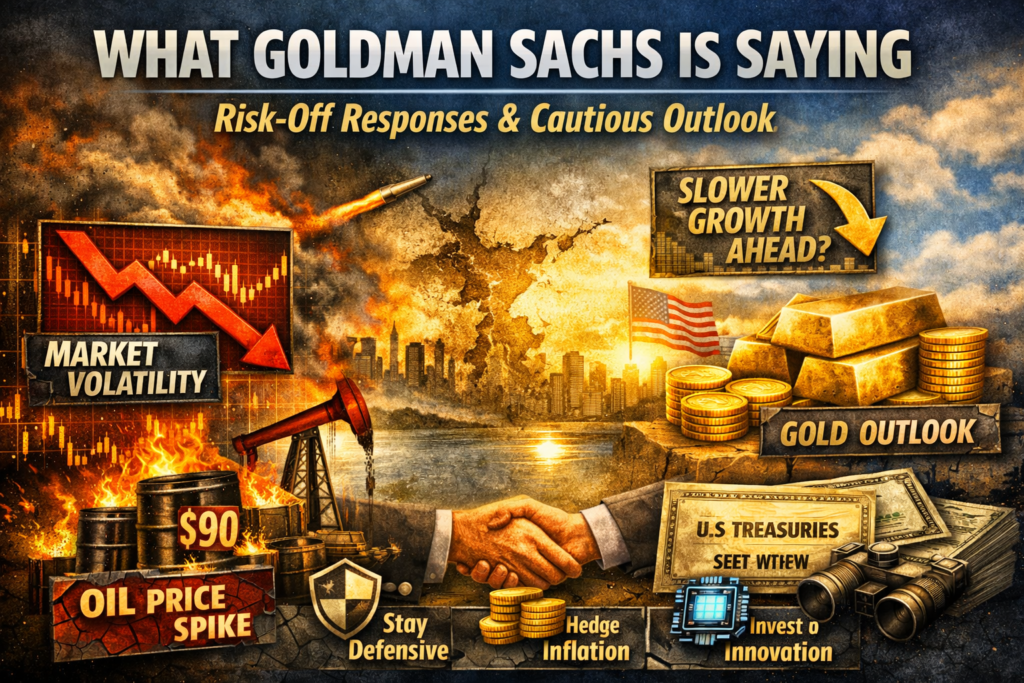

Currency markets rarely move on a single narrative. Right now, the euro sits at the intersection of two very different risks: internal political fragmentation and external geopolitical shock. On one side, uncertainty surrounding Viktor Orbán and Hungary’s role within the EU. On the other, escalating tensions around the Strait of Hormuz—one of the world’s most critical energy arteries.
For EUR/GBP, the question isn’t just direction—it’s which risk dominates.
Scenario 1: Orbán Exit — Political Fracture in the Eurozone
If Hungary were to move closer to exiting EU frameworks—or even escalate its long-standing disputes with Brussels—the implications would be less about immediate economic damage and more about institutional credibility.
Markets would likely interpret such a move as:
- A sign of growing fragmentation within the European Union
- A challenge to policy cohesion, especially on fiscal and foreign policy
- A potential precedent for other politically strained member states
For the euro, this translates into structural pressure. Investors tend to discount currencies tied to political uncertainty, particularly when it raises questions about long-term unity.
Against the pound, this could push EUR/GBP lower—especially if the UK appears relatively stable by comparison.
Scenario 2: Hormuz Crisis — Energy Shock and Global Risk
A disruption in the Strait of Hormuz would be a very different kind of shock—external, immediate, and global.
Roughly a fifth of the world’s oil passes through this narrow channel. Any escalation—military or otherwise—could trigger:
- A sharp spike in oil prices
- Rising inflation expectations
- A flight to safe-haven assets
For the eurozone, which is heavily dependent on energy imports, this is a clear negative. Higher energy costs would strain growth and complicate monetary policy for the European Central Bank.
However, here’s the twist: in a full-scale risk-off environment, the pound may not outperform either. EUR/GBP could become more range-bound, or even drift higher if UK vulnerabilities (like external deficits) come into focus.
Relative Sensitivity: Euro vs. Pound
The EUR/GBP pair is less about absolute strength and more about relative weakness.
- Euro sensitivity: Political cohesion, energy exposure, ECB policy constraints
- Pound sensitivity: Growth outlook, external balances, Bank of England credibility
In a purely political shock (Orbán scenario), the euro likely underperforms.
In a global energy shock (Hormuz scenario), both currencies face pressure—but the outcome becomes less directional and more nuanced.
Market Positioning: What Traders Are Watching
Markets are currently balancing probabilities:
- Low-probability, high-impact: Hormuz disruption
- Higher-probability, slower-burn: EU political friction
This creates a tension in positioning. Traders may hedge tail risks (oil spikes, geopolitical escalation) while still pricing in gradual euro softness from internal dynamics.
Volatility, rather than trend, may dominate in the near term.
Conclusion: A Currency Caught Between Fault Lines
The euro is not facing a single threat—it’s navigating a layered risk environment.
- If political fragmentation deepens, EUR/GBP likely trends lower
- If geopolitical shock dominates, the pair may trade unpredictably within wider ranges
Ultimately, the euro’s path will depend on which narrative gains traction:
internal division or external disruption.
In today’s market, that balance can shift quickly.
And for EUR/GBP, that means one thing:
expect movement—but don’t expect simplicity.