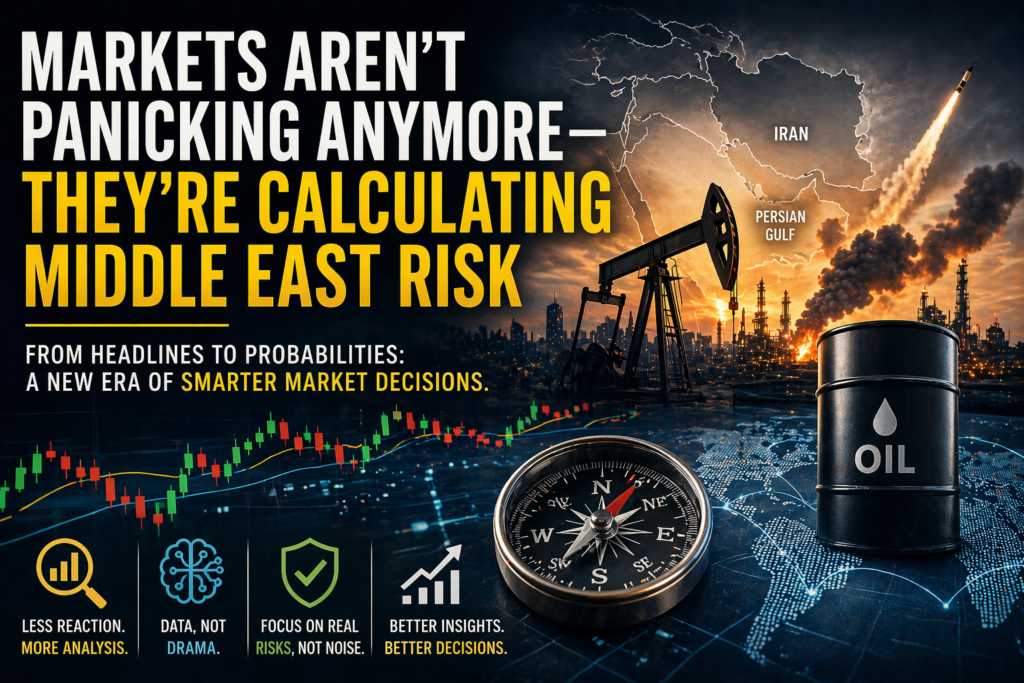
For years, geopolitical tension in the Middle East triggered almost automatic reactions in global financial markets: oil spikes, equities wobble, and investors rush into safe-haven assets. But in 2026, something is changing.
Markets are no longer reacting with the same urgency. Instead, they’re becoming more selective—more analytical. The result is a subtle but important shift: from emotional response to probabilistic thinking.
From Shock to Calculation
Historically, any escalation in the Middle East—particularly in strategic zones like the Persian Gulf—would immediately spark fears of supply disruptions.
Mentions of countries like Iran or threats to key shipping routes were enough to send oil prices surging within hours.
Today, markets are asking a different question:
“What is the actual probability of sustained disruption?”
This shift reflects a growing understanding that not all geopolitical events translate into real economic impact.
Oil Markets: Pricing Risk More Precisely
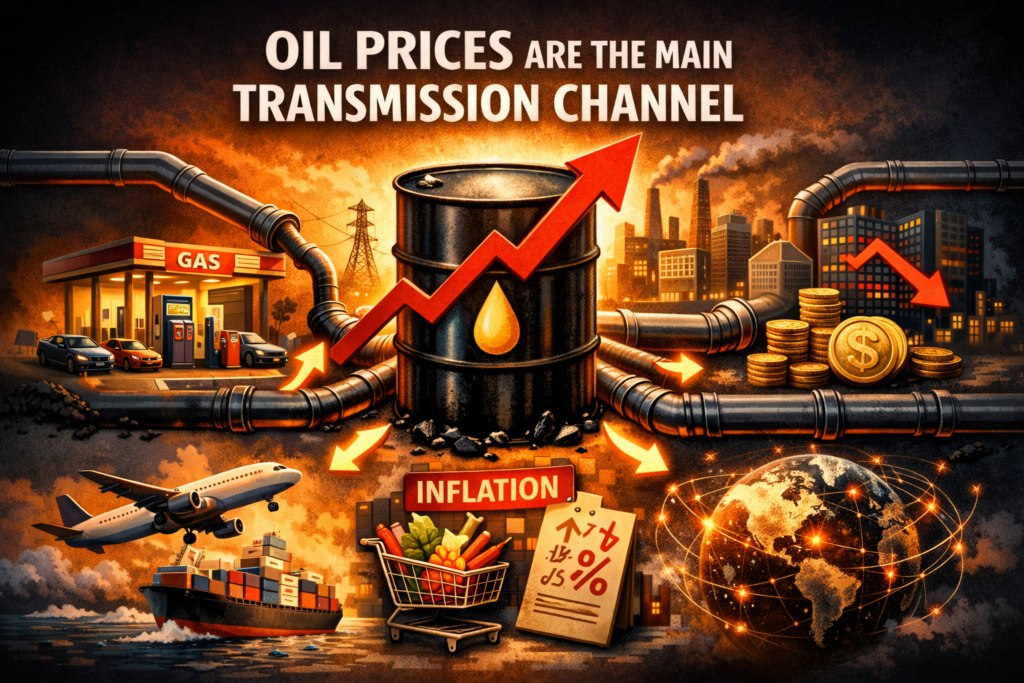
Oil remains the central channel through which geopolitical risk is transmitted. However, pricing dynamics have evolved.
Instead of reacting to headlines alone, traders now distinguish between:
- Short-term noise (rhetoric, limited strikes, contained incidents)
- Material threats (infrastructure damage, blocked shipping lanes, sustained conflict)
This means oil prices are increasingly driven by expected supply disruptions, not just perceived risk.
Even when tensions rise, markets often hold back unless there’s clear evidence that physical supply—especially through chokepoints like the Strait of Hormuz—is at risk.
The Decline of the “Automatic Risk-Off” Trade
One of the most notable changes is in investor behavior.
Previously, geopolitical escalation triggered a rapid “risk-off” move:
- Emerging market currencies fell
- Equities declined
- Capital flowed into US Treasuries and gold
Now, that reaction is less predictable.
Investors are increasingly:
- Differentiating between regional and global risks
- Avoiding blanket sell-offs
- Maintaining exposure where economic fundamentals remain intact
This has reduced the frequency of indiscriminate capital flight from countries like South Africa.
Why Markets Are Adapting
Several structural changes are driving this recalibration:
1. Experience and Pattern Recognition
Markets have witnessed repeated geopolitical flare-ups that failed to escalate into full-scale disruptions. Over time, this has reduced sensitivity to initial headlines.
2. Improved Information Flow
Real-time intelligence, satellite data, and faster reporting allow traders to assess situations more accurately—often within minutes.
3. Diversified Energy Supply
Global energy markets are more flexible than they were a decade ago. Alternative supply sources and strategic reserves reduce the impact of localized shocks.
Still Fragile: When the Old Playbook Returns
This doesn’t mean geopolitical risk no longer matters. It means the threshold for reaction is higher.
Markets will still respond aggressively if:
- Key infrastructure is damaged
- Major supply routes are disrupted
- Conflict spreads beyond contained zones
In those moments, the old dynamics quickly re-emerge:
- Oil spikes
- Safe-haven demand surges
- Risk assets sell off
The difference is that these reactions are now event-driven, not headline-driven.
Implications for Emerging Markets
For economies like South Africa, this shift is significant.
The South African rand, long seen as a proxy for global risk sentiment, may experience:
- Less frequent panic-driven sell-offs
- Sharper, more event-specific volatility
- Greater influence from domestic fundamentals between shocks
In other words, the rand is still sensitive—but less indiscriminately so.
A More Mature Market Response
What we’re seeing is not complacency—it’s refinement.
Markets are learning to:
- Separate signal from noise
- Assign probabilities instead of reacting emotionally
- Focus on real economic transmission channels
This leads to more stable pricing in normal periods—and more decisive reactions when genuine risks emerge.
Conclusion: Less Reaction, More Analysis
The recalibration of Middle East war risk marks an evolution in global financial behavior.
Geopolitics still matters. Oil still matters. Risk sentiment still matters.
But markets are no longer driven purely by fear—they’re increasingly guided by evidence, probability, and impact.
In a world saturated with breaking news, that shift may be one of the most important developments for investors in 2026 and beyond.