A fragile ceasefire has fractured, and with it, the illusion of stability in global markets. Rising tensions between Iran and the United States have once again thrust geopolitics to the center of financial uncertainty, sending shockwaves through oil, equities, and currencies worldwide.
What was meant to be a temporary pause in hostilities has quickly deteriorated into renewed confrontation. Iranian leadership has openly denounced the United States, signaling a more aggressive stance and casting doubt on any near-term diplomatic resolution. This breakdown comes at a particularly sensitive moment, as global markets were already on edge due to slowing economic growth and persistent inflationary pressures.
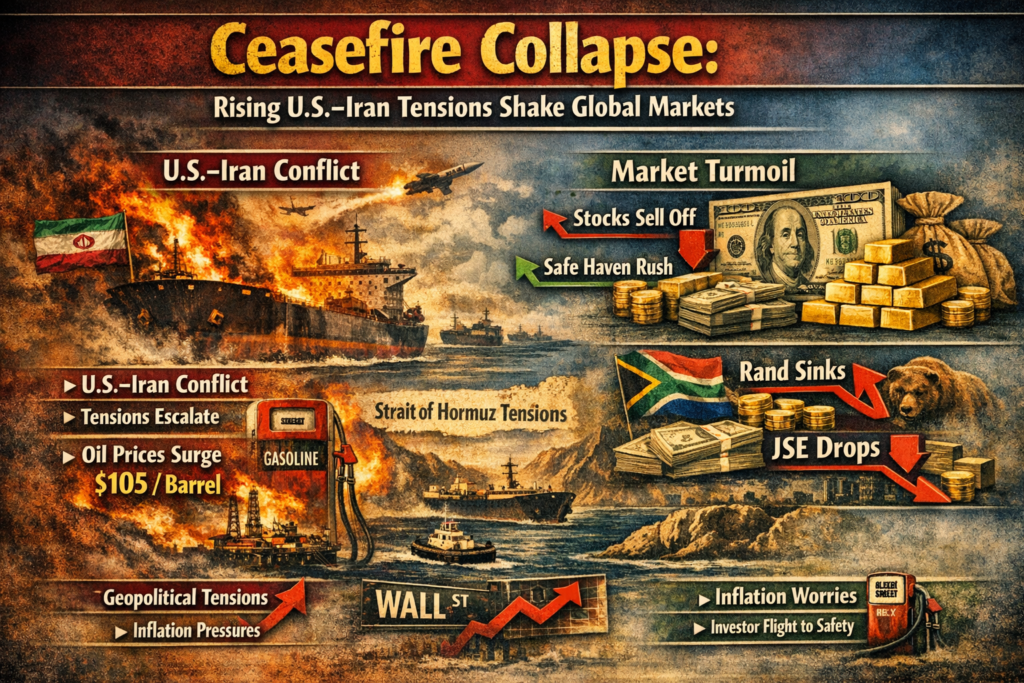
At the heart of the crisis lies control over the Strait of Hormuz, a narrow but vital passage through which a significant portion of the world’s oil supply flows. The situation remains highly unstable, with hundreds of ships reportedly delayed and only limited traffic allowed under tight restrictions.
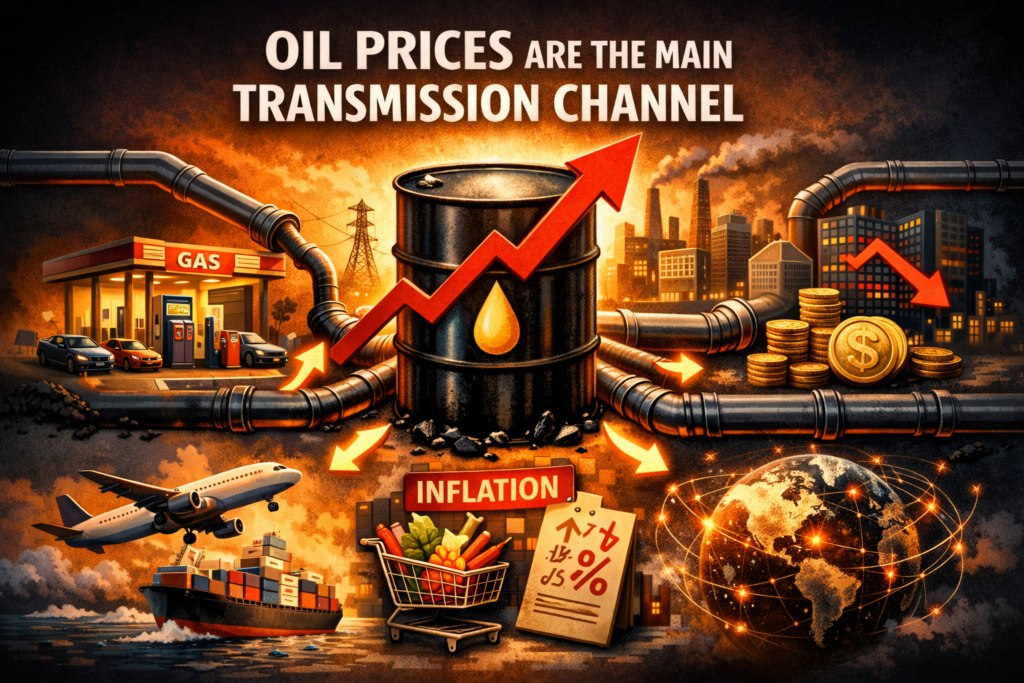
For energy markets, the implications are immediate and severe. Oil prices have surged toward the $100-per-barrel mark as traders price in the risk of prolonged supply disruption. The mere threat of restricted access to such a critical route is enough to trigger what analysts call a “geopolitical risk premium”—a built-in price increase driven not by actual shortages, but by fear of what could happen next. Yet the impact extends far beyond oil. Financial markets have shifted into a cautious “risk-off” mode, with investors reassessing exposure to volatile assets. Historically, periods of heightened geopolitical tension push capital toward safe havens such as gold and government bonds, while equities and emerging markets face pressure. At the same time, the broader economic backdrop is far from reassuring. Growth in the United States had already slowed significantly before the latest escalation, with GDP expansion weakening and consumer momentum fading.
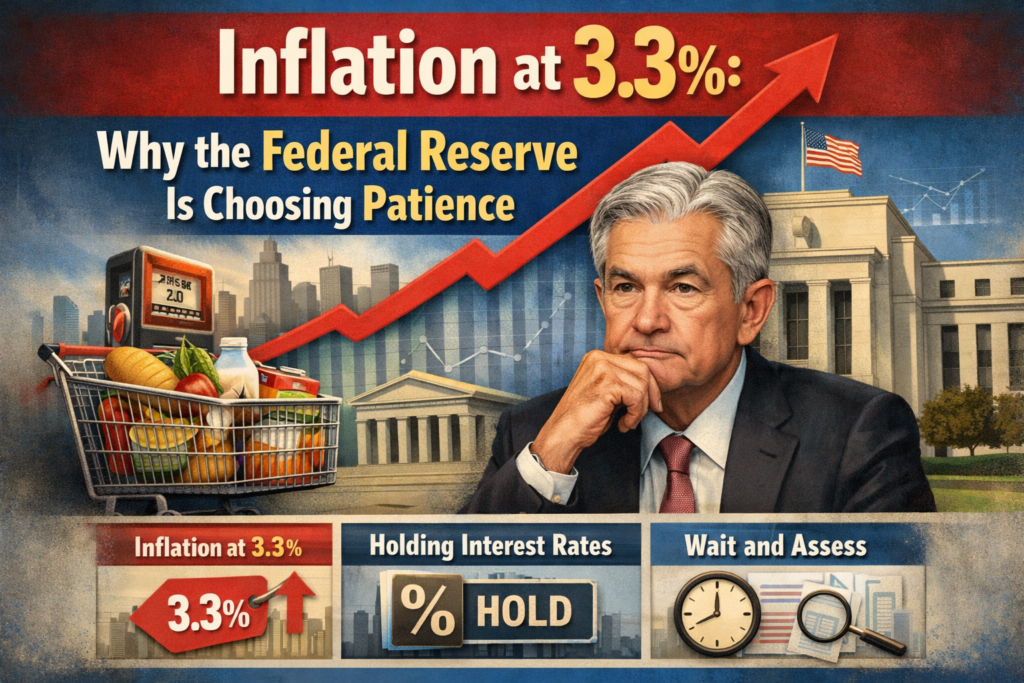
The renewed conflict adds another layer of strain, threatening to push energy costs higher and complicate the outlook for both inflation and monetary policy.
What makes this moment particularly dangerous is the convergence of risks. On one side, higher oil prices could fuel inflation globally, forcing central banks to maintain tighter monetary policy for longer. On the other, geopolitical instability and rising costs could dampen economic growth, raising the specter of stagflation—a combination of slow growth and persistent inflation that policymakers struggle to address.
Meanwhile, markets are being driven as much by headlines as by fundamentals. Each statement from Washington or Tehran has the potential to trigger sharp swings in prices, underscoring just how sensitive the current environment has become. Analysts warn that until there is clarity—either through de-escalation or further confrontation—volatility is likely to remain elevated.
Looking ahead, the path forward remains uncertain. A renewed diplomatic effort could stabilize the situation and ease pressure on energy markets. However, continued escalation—particularly around the Strait of Hormuz—could deepen the crisis, pushing oil prices higher and amplifying financial market stress.
For now, the breakdown of the truce serves as a stark reminder: in an interconnected global economy, geopolitical fractures can quickly become financial fault lines. And as tensions between Iran and the United States intensify, markets are left navigating a landscape where uncertainty is the only constant.