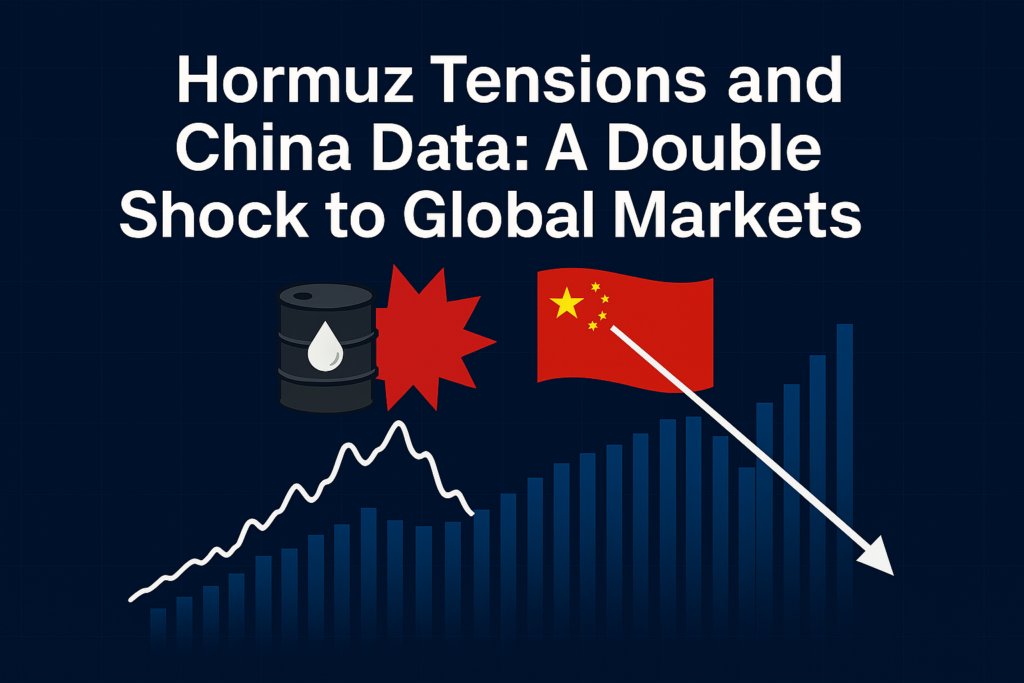
Global markets are being pulled in opposite directions as geopolitical risk and macro fundamentals collide.
🌍 Geopolitics: Hormuz Back in Focus
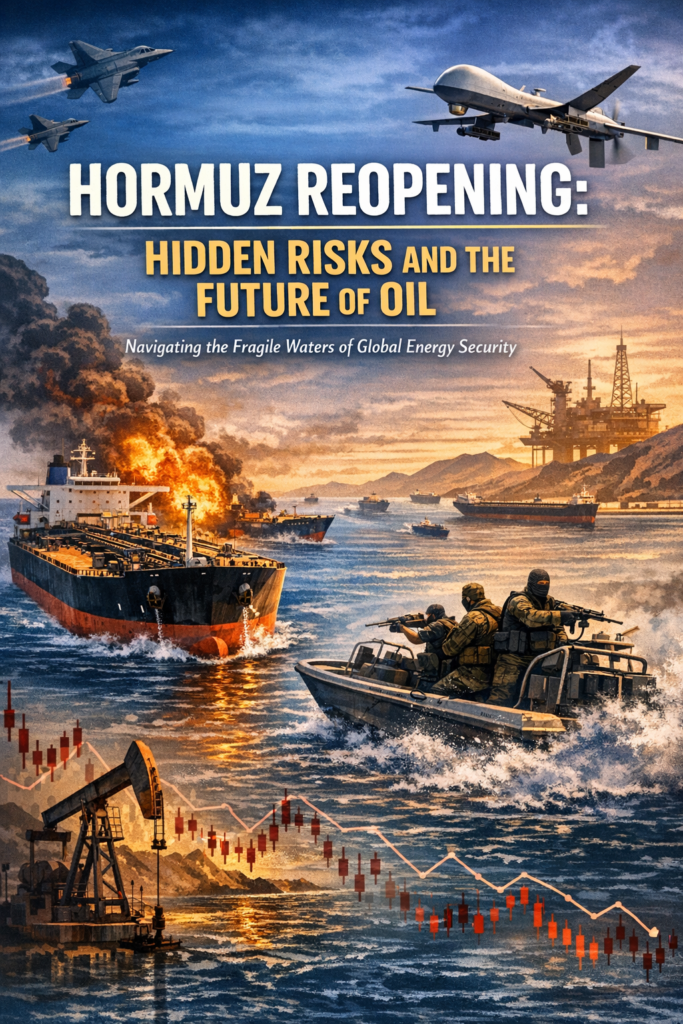
Renewed tensions around the Strait of Hormuz have injected a fresh risk premium into energy markets. With a significant share of global oil flows passing through the route, even the threat of disruption has been enough to:
- Push crude prices higher
- Lift energy-sector volatility
- Rekindle inflation concerns in energy‑importing economies
This has reinforced a classic risk-off impulse, particularly in emerging markets and rate-sensitive assets.
📉 China: Growth Signals Disappoint
At the same time, weaker-than-expected China data has unsettled sentiment:
- Demand indicators point to a sluggish recovery
- Commodity-linked assets have come under pressure
- Expectations for a strong China-led global rebound are being reassessed
For markets reliant on Chinese demand — from industrial metals to EM currencies — the data has acted as a clear drag.
📊 Market Impact: Volatility Returns
The combined effect is a choppy risk environment:
- Equities: Loss of momentum, with cyclicals underperforming defensives
- Commodities: Oil supported by geopolitics, metals pressured by growth fears
- FX: Safe havens favored; high-beta EM currencies vulnerable
- Rates: Volatility as inflation risks clash with growth concerns
🧭 Big Picture Takeaway
Markets are no longer trading on a single narrative. Instead, investors are navigating:
Geopolitical tail risks + uneven global growth + fragile sentiment
This is a setup where headline risk matters, correlations break down, and positioning becomes as important as fundamentals.