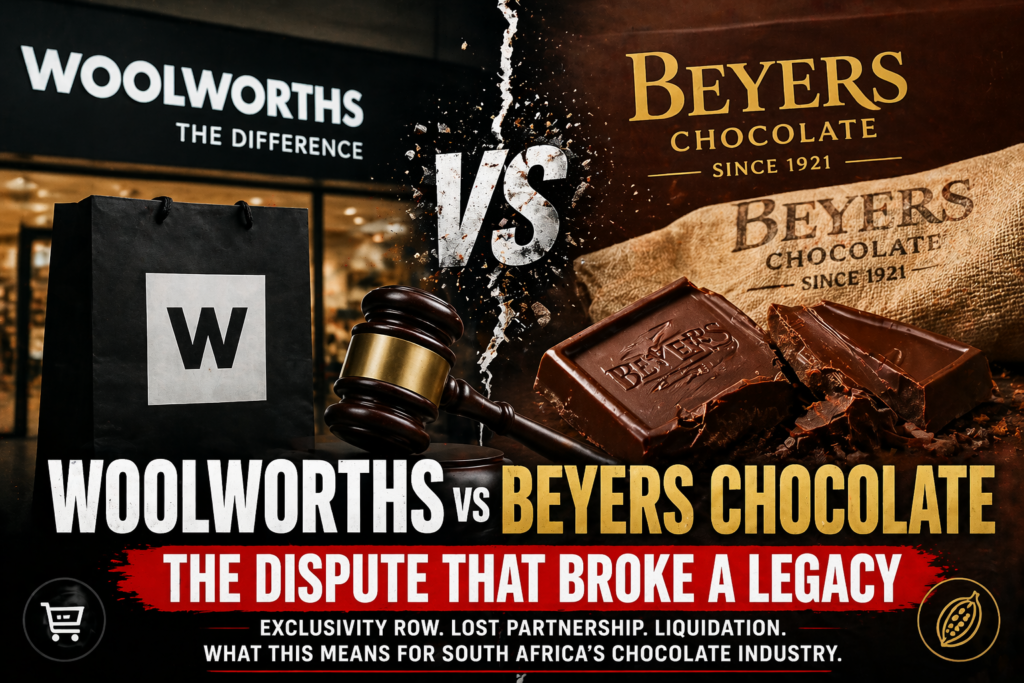
A long-standing partnership between Woolworths Holdings Limited and Beyers Chocolates has come to a dramatic end, sending shockwaves through the local food manufacturing sector. What began as a business disagreement has escalated into a full-blown crisis—ultimately leading to Beyers entering liquidation.
⚠️ The Dispute Explained
For more than three decades, Beyers Chocolates was a key supplier to Woolworths, producing premium chocolates enjoyed by millions of South Africans.
However, tensions arose when:
- Beyers expanded its operations by acquiring an additional production facility
- The new facility supplied competing retailers such as Checkers and Pick n Pay
- Woolworths reportedly viewed this as a breach of exclusivity expectations
This move fundamentally changed the dynamics of their relationship.
🔥 The Breaking Point
According to industry reports:
- Woolworths raised concerns about shared production capabilities with competitors
- The retailer allegedly demanded that Beyers shut down or limit external supply operations
- Beyers refused, citing business growth and job preservation
- Woolworths responded by reducing or withdrawing orders
Because Woolworths made up a significant portion of Beyers’ revenue, the impact was immediate and severe.
💥 Collapse into Liquidation
The fallout led to devastating consequences:
- 🏭 Beyers Chocolates entered liquidation
- ❌ A 34-year partnership came to an end
- 👷 Jobs and production facilities were placed at risk
This marks the fall of one of South Africa’s most recognizable independent chocolate producers.
🍬 What Happens to Popular Products?
Beyers was behind several well-known products, including:
- Chuckles
- Amarula chocolate range
- Sweetie Pie
Despite the dispute:
- Woolworths has indicated that key products like Chuckles will remain available
- The retailer is expected to source alternatives or continue production through other suppliers
📊 Industry Implications
This dispute highlights deeper structural issues within retail and manufacturing:
- ⚖️ Power imbalance between large retailers and suppliers
- 📉 Risks of overdependence on a single major client
- 🏭 Challenges of scaling while maintaining exclusive partnerships
For many analysts, this case serves as a warning for suppliers navigating relationships with dominant retail chains.
🧠 Final Thoughts
The Woolworths–Beyers fallout is more than just a business disagreement—it’s a turning point in South Africa’s retail supply chain landscape.
While consumers may still find their favorite chocolates on shelves, behind the scenes, the industry is grappling with:
- Changing supplier dynamics
- Competitive pressures
- The high stakes of retail partnerships
This “bitter breakup” will likely shape how retailers and manufacturers structure deals for years to come.