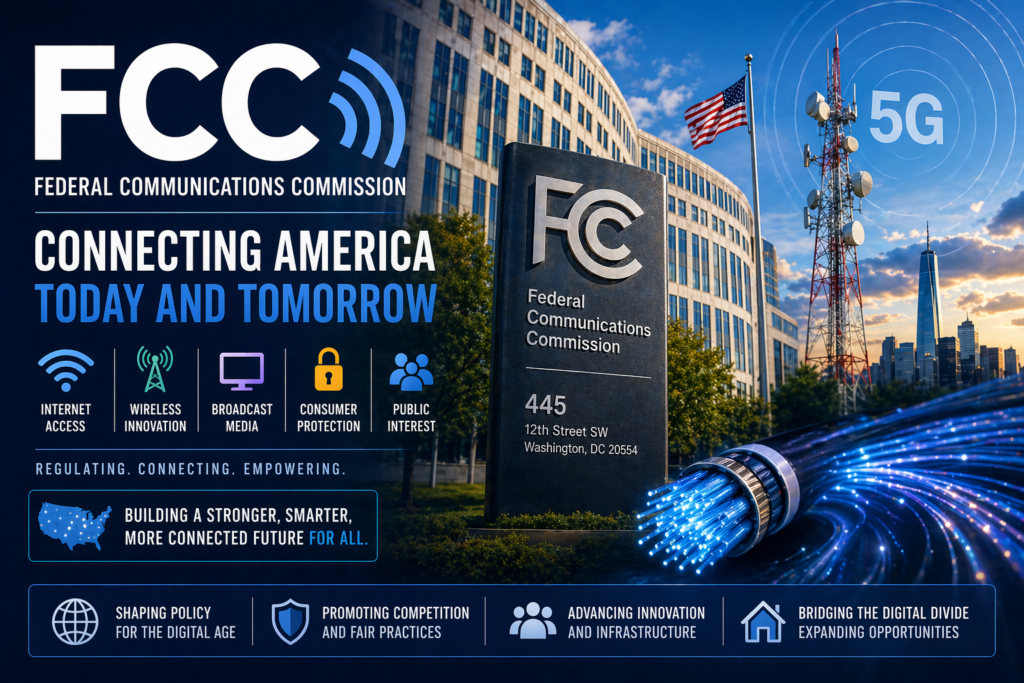
The Federal Communications Commission (FCC) is a key regulatory body in the United States responsible for overseeing communications across internet, television, radio, satellite, and telecommunications networks.
Created in 1934, the FCC ensures that communication systems operate in a way that is fair, competitive, and accessible to the public. In today’s digital world, its influence is more important than ever.
🎯 What the FCC Does
The FCC regulates how communication services are delivered and used across the country.
Core Responsibilities:
- 📶 Regulates internet service providers (ISPs)
- 📡 Allocates and manages the radio frequency spectrum
- 📺 Oversees broadcast television and radio
- 📞 Sets rules for telecom providers and carriers
- 🛡️ Protects consumers from scams, fraud, and abuse
👉 Essentially, the FCC acts as the rule-maker for communication systems in the U.S.
🌐 Why the FCC Matters in 2026
As technology evolves, the FCC’s role continues to expand.
Key Focus Areas:
- Broadband expansion in rural and underserved areas
- 5G network rollout and infrastructure
- Net neutrality policies and internet fairness
- Cybersecurity and consumer data protection
👉 FCC decisions directly affect how fast, affordable, and open the internet is.
📊 Major Policies and Programs
🌍 Broadband for All
The FCC works to ensure internet access reaches:
- Rural communities
- Low-income households
- Underserved regions
⚖️ Net Neutrality Debate
A major ongoing issue:
- Should ISPs treat all internet traffic equally?
- Or can they prioritize certain services?
👉 This impacts streaming, gaming, and online businesses.
📞 Robocall & Scam Protection
- Implements tools and rules to block spam calls
- Protects consumers from fraud and identity theft
🆘 Emergency Communication Systems
The FCC manages systems like:
- Wireless Emergency Alerts (WEA)
- Emergency broadcast systems
👉 These are critical during natural disasters and crises.
⚠️ Challenges and Controversies
The FCC often faces criticism and debate:
- Regulation vs free-market competition
- Privacy concerns in a data-driven world
- Influence of large telecom companies
- Balancing innovation with consumer protection
👉 Its policies can have wide-reaching economic and political consequences.
🧠 How the FCC Affects Everyday Life
Even if you don’t notice it, the FCC impacts your daily digital experience:
- 📱 Mobile signal strength and coverage
- 🌐 Internet speeds and pricing
- 📺 Content regulations on broadcast media
- 📞 Protection from robocalls and scams
🔮 The Future of the FCC
Looking ahead, the FCC will likely play a major role in:
- Expanding high-speed internet access globally
- Regulating AI-driven communication platforms
- Managing next-gen technologies like 6G networks
- Strengthening cybersecurity standards
🏁 Final Thoughts
The Federal Communications Commission is one of the most influential regulatory bodies in modern society. As communication technologies evolve, its role will continue to shape how people connect, communicate, and access information.
📌 Bottom Line:
The FCC may operate behind the scenes, but its decisions directly impact your internet, phone service, and digital freedom every day.