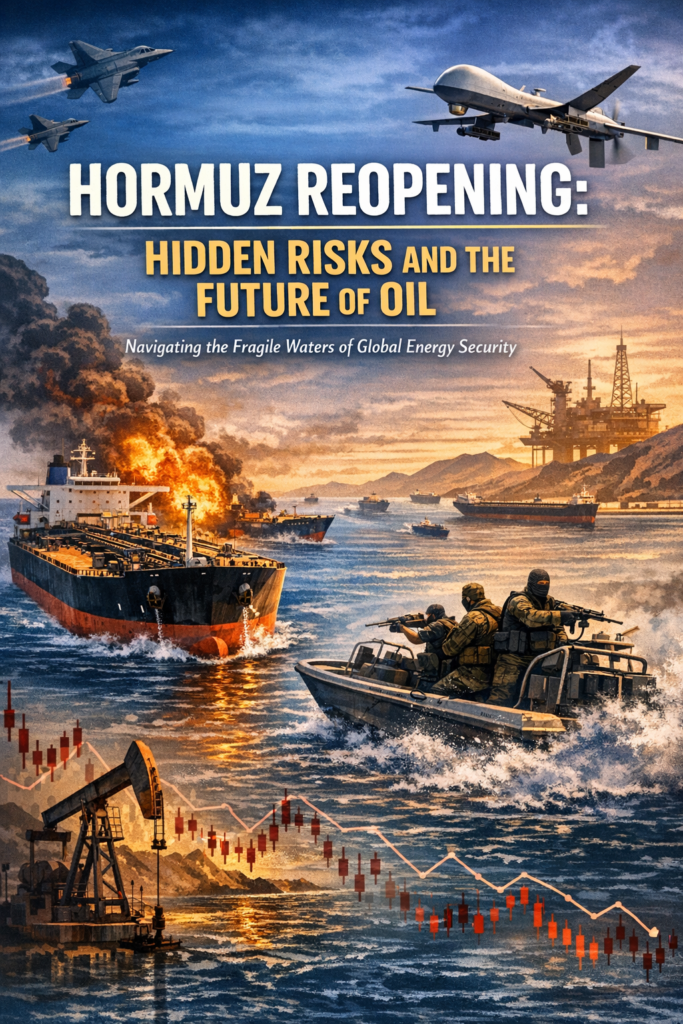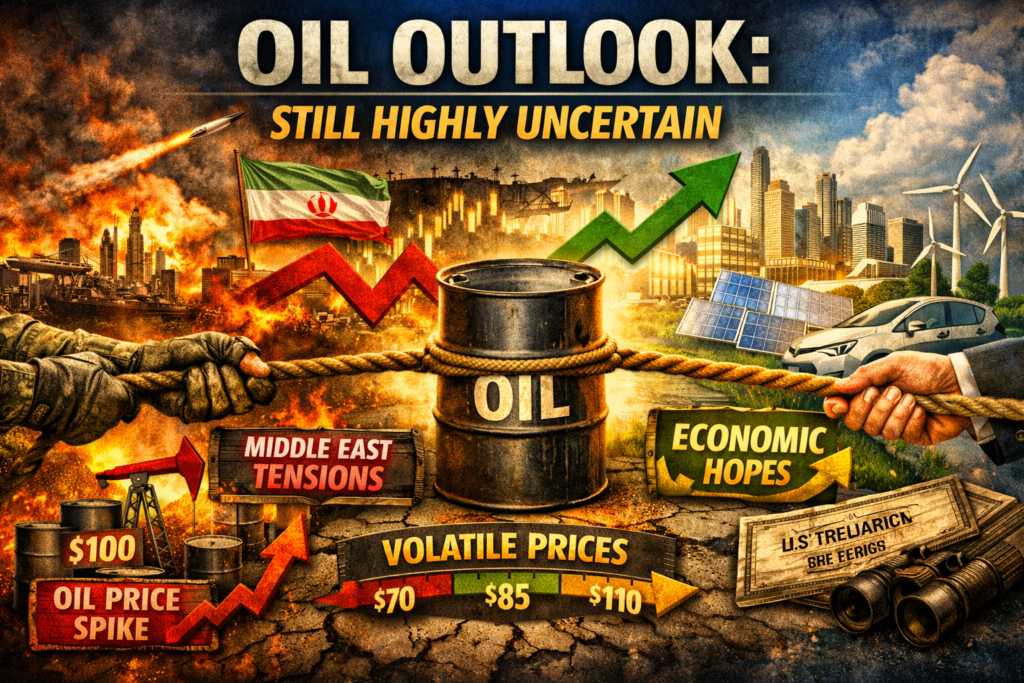
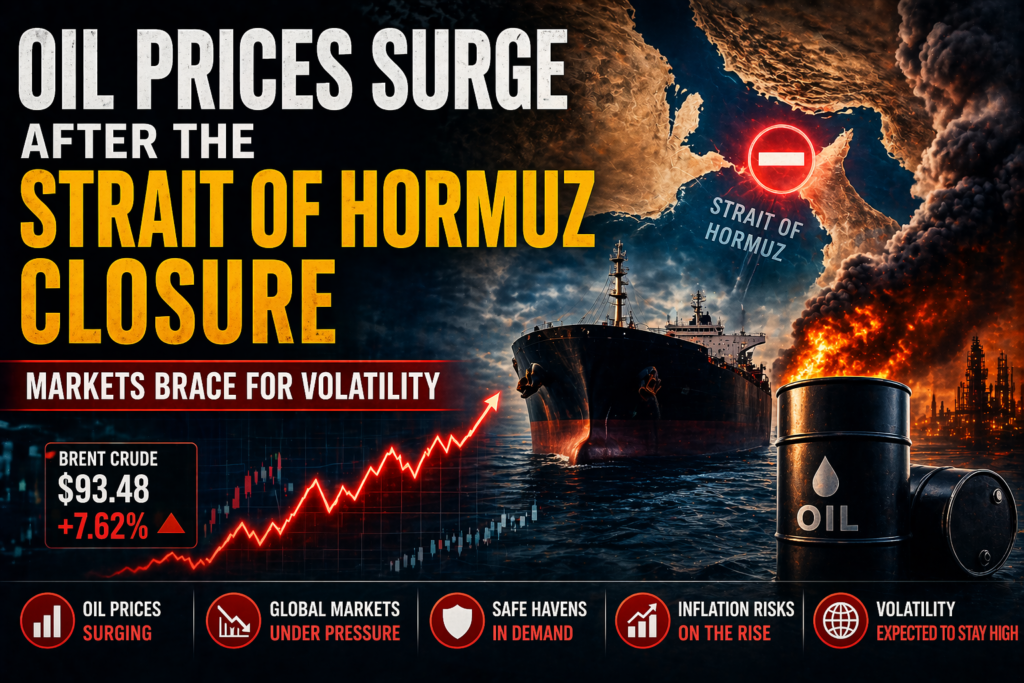
Global markets have been jolted by a sudden and severe disruption: the closure of the Strait of Hormuz. As one of the world’s most critical oil transit routes, its shutdown has triggered an immediate spike in crude prices and sent shockwaves across financial markets.
The message from investors is clear: this is not just another headline—it’s a genuine supply shock with global consequences.
Why the Strait of Hormuz Matters
The Strait of Hormuz sits at the heart of global energy flows, connecting the Persian Gulf to international markets. Roughly 20% of the world’s oil supply passes through this narrow corridor each day.
Key producers—including Saudi Arabia, United Arab Emirates, and Kuwait—depend heavily on this route to export crude.
A closure, even if temporary, creates immediate uncertainty around:
- Physical supply availability
- Shipping timelines
- Insurance and transport costs
That uncertainty alone is enough to drive prices sharply higher.
Oil Prices React First—and Fast
Energy markets are typically the first to respond to geopolitical disruptions, and this time is no different.
Following the closure:
- Crude oil prices surged within hours
- Volatility in energy futures spiked
- Traders priced in the risk of prolonged disruption
Unlike previous geopolitical flare-ups, this move reflects a tangible constraint on supply, not just perceived risk.
A Classic “Risk-Off” Shock
As oil surged, broader markets quickly shifted into risk-off mode.
Investors moved capital into traditional safe havens:
- US Treasuries
- Gold
- The US dollar
Meanwhile, risk-sensitive assets came under pressure:
- Global equities declined
- Emerging market currencies weakened
- Commodity-importing economies faced renewed stress
The speed of the reaction highlights how central energy flows remain to global financial stability.
Inflation Fears Return
Rising oil prices don’t stay confined to energy markets—they filter through the entire global economy.
Higher crude costs lead to:
- Increased fuel prices
- Rising transportation costs
- Upward pressure on food and goods
This creates a renewed inflationary impulse at a time when many central banks are still navigating post-pandemic price pressures.
Institutions like the European Central Bank and the Federal Reserve now face a more complicated landscape:
- Tighten policy to contain inflation
- Or support growth amid rising uncertainty
Winners and Losers in the Oil Shock
Not all economies are affected equally.
Likely Winners
- Oil-exporting nations benefit from higher prices
- Energy companies see improved margins
- Some commodity-linked currencies may find support
Likely Losers
- Oil-importing economies face higher costs
- Consumer-driven markets may weaken
- Emerging markets with external imbalances are particularly vulnerable
For countries like South Africa, the impact is especially acute:
- A higher import bill
- Currency pressure due to increased demand for dollars
- Rising inflation at home
How Long Could the Disruption Last?
This is the key question—and the one markets are struggling to price.
Scenarios range from:
- Short-term disruption → temporary price spike, rapid normalization
- Prolonged closure → sustained high oil prices, deeper economic impact
- Escalation → broader regional conflict with severe global consequences
Much depends on geopolitical developments involving regional powers, including Iran, and the speed of any diplomatic or military response.
Market Outlook: Volatility Is Here to Stay
Even if the situation stabilizes, one thing is certain: volatility has returned.
Markets are now highly sensitive to:
- Updates on shipping routes and naval activity
- Official statements from governments
- Real-time data on oil flows
Expect:
- Sharp intraday price swings
- Rapid shifts in sentiment
- Increased correlation across asset classes
Bottom Line
The closure of the Strait of Hormuz is a stark reminder of how fragile global supply chains can be—and how quickly geopolitical events can reshape financial markets.
Oil has surged. Risk appetite has fallen. Inflation concerns are back.
And until there is clarity on the duration and scale of the disruption, markets will remain on edge.
In a world dependent on energy flows, a single chokepoint can move everything.