
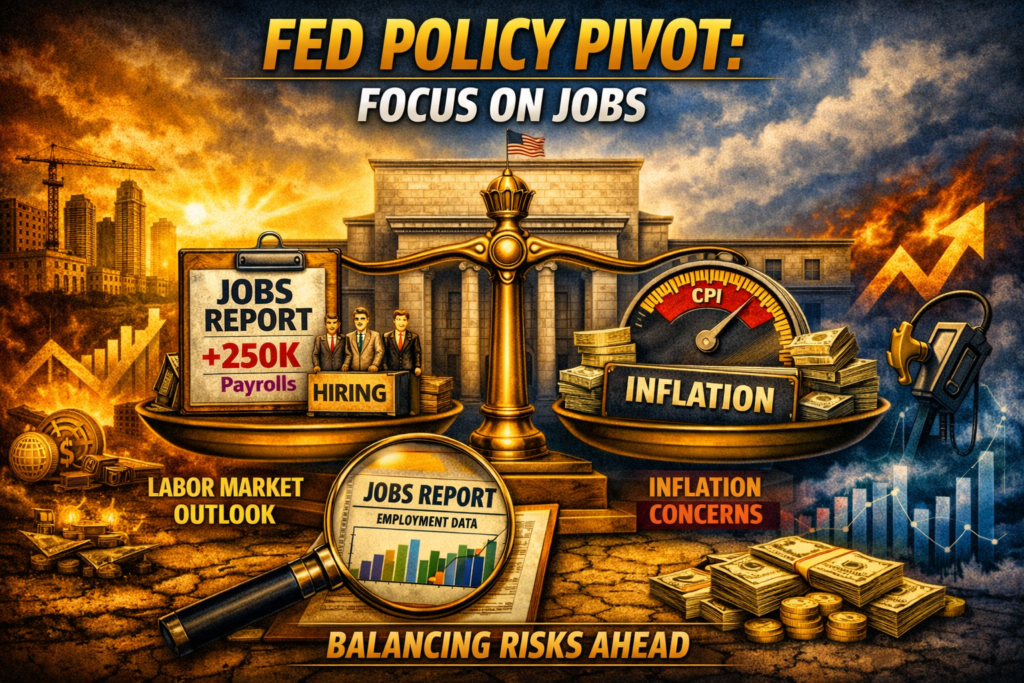
Federal Reserve Governor Christopher Waller is reinforcing a familiar but important message from the Fed right now:
the US labour market is becoming the key variable for policy timing, not inflation alone.
🔍 What Waller is signaling
Waller’s stance can be summarized simply:
- 📊 The Fed is shifting attention toward employment data
- 🧾 Inflation is still important, but less urgent than before
- ⚠️ Any signs of labour-market weakness could pull forward rate-cut expectations
In other words:
the Fed is moving from “inflation fighting mode” toward a data-dependent transition phase
🧠 Why jobs data matters more now
The Fed’s thinking is increasingly driven by three labour indicators:
1. 📉 Job creation trend
- Slowing payroll growth = early warning of demand cooling
- Sustained slowdown = higher probability of policy easing
2. 📊 Unemployment rate
- Still historically low, but a key trigger metric if it rises quickly
3. 💼 Wage growth
- If wages slow, inflation pressure becomes less persistent
- If wages remain sticky, Fed stays cautious
⚖️ What this means for Fed policy
Waller’s comments fit into a broader Fed narrative:
🟡 Base case (current stance)
- No urgent need to cut rates immediately
- “Wait and see” approach continues
🟢 Dovish trigger scenario
If labour market weakens:
- Rate cuts come sooner than expected
- Financial conditions loosen faster
- USD tends to weaken further
🔴 Hawkish fallback scenario
If jobs remain strong:
- Fed delays easing
- USD stabilises or rebounds
- Gold and equities may lose momentum
💵 Market implications (why traders care)
Waller’s framing directly affects major assets:
💵 US Dollar
- Weak jobs = USD bearish
- Strong jobs = USD support returns
🥇 Gold
- Softer labour data = bullish gold (rate-cut bets rise)
- Strong labour data = gold consolidation
📊 Equities
- Weak jobs (mildly) = bullish (liquidity expectations)
- Too-weak jobs = recession concern risk
🌍 Macro context (why this matters now)
This signal lands in a sensitive macro environment:
- 🛢️ Oil volatility still affecting inflation expectations
- 💵 USD already under pressure from easing rate expectations
- 🌐 Markets highly sensitive to any shift in Fed tone
So Waller’s message is effectively:
“The next big policy signal will come from jobs — not geopolitics or inflation alone.”
📌 Bottom line
Waller is confirming a key shift in Fed focus:
The US labour market is now the primary trigger for the next policy move, with weakening jobs data potentially accelerating rate-cut expectations.