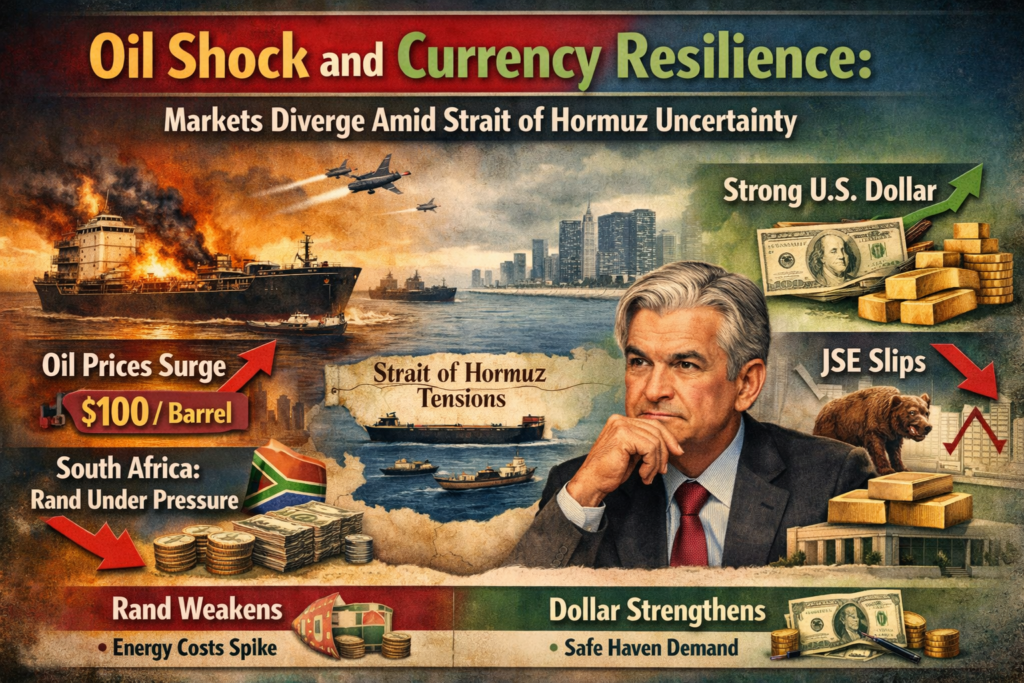
The Middle East is central to global oil supply. When tensions rise—say conflicts involving countries like Iran, Saudi Arabia, or disruptions in shipping routes like the Strait of Hormuz—oil prices tend to spike.
South Africa imports most of its oil. So:
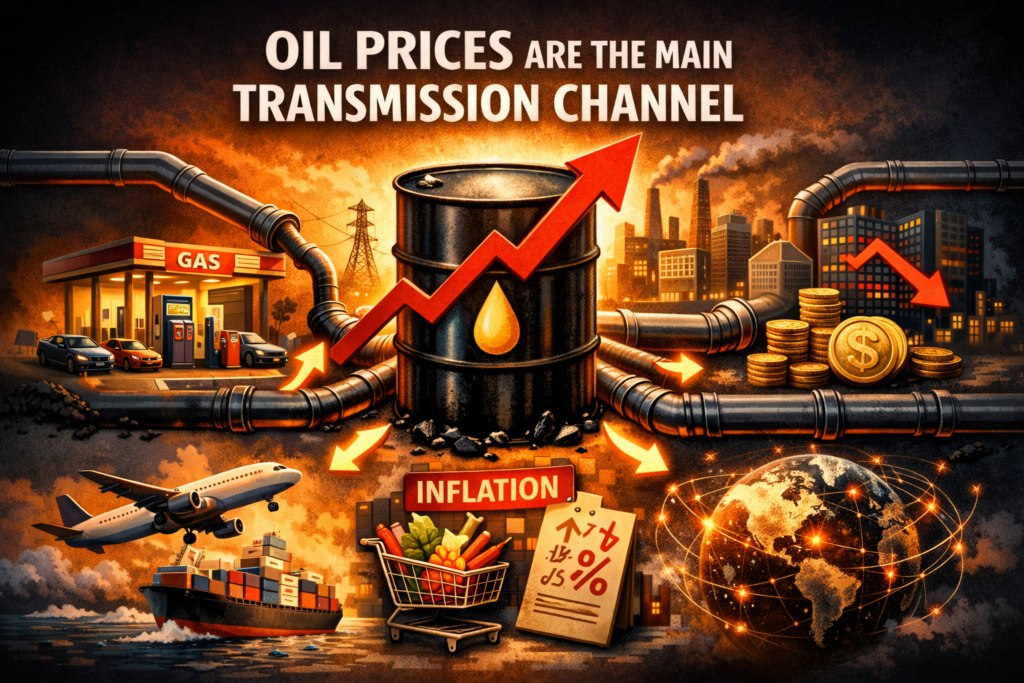
- Higher oil prices → higher fuel costs
- Higher fuel costs → inflation rises
- Inflation → pressure on the rand (South African rand weakens)
2. Global risk sentiment (“risk-on / risk-off”)
When geopolitical tensions escalate (wars, attacks, instability), investors get nervous.
They pull money out of “riskier” emerging markets like South Africa and move it into “safe havens” like:
- US dollar
- Swiss franc
This capital flight weakens the rand, even if nothing locally has changed.
3. Commodity price spillovers
South Africa is a major exporter of commodities (gold, platinum, coal). Middle East instability can:
- Push oil prices up (bad for SA)
- Sometimes push gold prices up (good for SA)
But usually, the negative effects dominate because:
- Oil imports are immediate and costly
- Investor sentiment shifts quickly against emerging markets
4. Trade routes and shipping disruptions
Key shipping lanes near the Middle East (like the Red Sea) are vital for global trade.
If disruptions occur:
- Shipping costs rise
- Imports into South Africa become more expensive
- Export logistics get affected
That adds pressure to inflation and the currency.
5. The rand is highly liquid and sensitive
The rand is one of the most traded emerging-market currencies. That makes it:
- Easy for global investors to buy/sell quickly
- A “proxy” for broader emerging market risk
So even global events not directly tied to South Africa—like Middle East tensions—can trigger large moves in the rand.
Bottom line
Middle Eastern geopolitics doesn’t directly control the rand—but it strongly influences the global forces that do:
- Oil prices
- Investor risk appetite
- Capital flows
- Trade costs
Because South Africa is deeply plugged into global markets and depends on imported energy, the rand ends up reacting quickly—and sometimes sharply—to events far outside its borders.