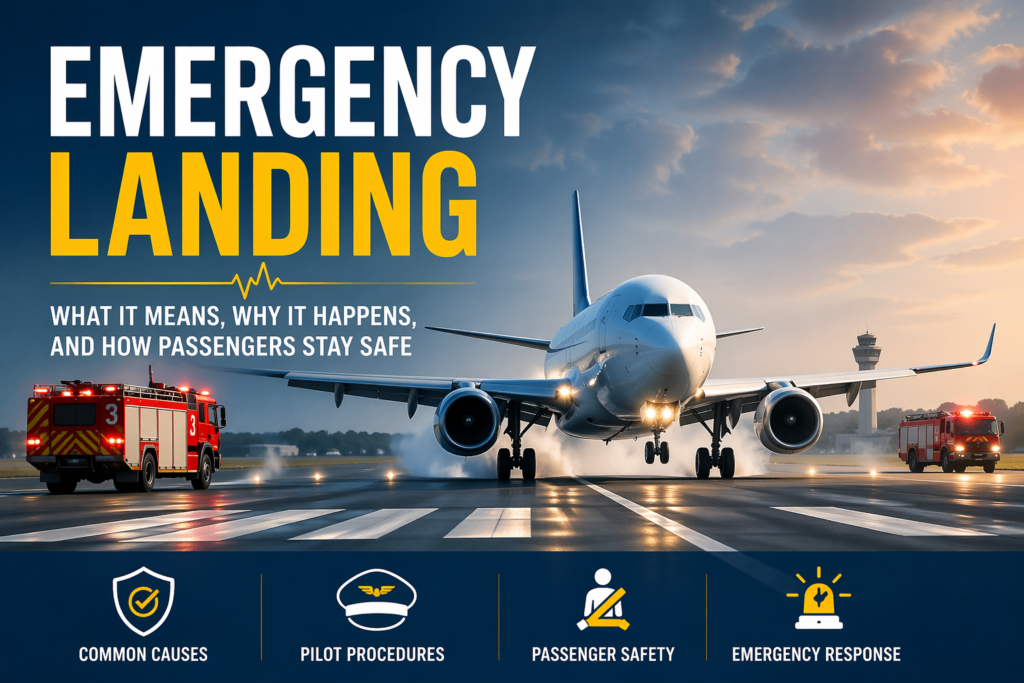
An emergency landing is one of the most serious situations in aviation—but also one of the most carefully managed. When something unexpected happens during a flight, pilots follow strict procedures to bring the aircraft safely to the ground as quickly as possible.
Despite how dramatic it may sound, emergency landings are rare and often handled successfully, thanks to advanced aircraft systems and highly trained crews.
What Is an Emergency Landing?
An emergency landing occurs when an aircraft must land urgently due to a situation that could compromise safety. Unlike routine landings, these are unplanned and require immediate coordination between pilots, cabin crew, and air traffic control.
Common Causes of Emergency Landings
Mechanical or Technical Issues
Aircraft are complex machines, and while failures are uncommon, issues such as engine problems or system malfunctions can require an immediate landing.
Medical Emergencies
If a passenger or crew member becomes seriously ill, pilots may divert to the nearest airport to get medical help quickly.
Fire or Smoke Onboard
Even minor signs of smoke are treated as critical. Pilots will land as soon as possible to eliminate risk.
Severe Weather Conditions
Unexpected turbulence, storms, or dangerous weather systems may force a diversion or emergency descent.
Fuel Concerns
Fuel leaks or unexpected consumption levels can make it unsafe to continue the journey.
Security Threats
Situations involving passenger behavior or potential threats may require rapid landing and intervention.
Types of Emergency Landings
Precautionary Landing
This is a controlled landing made before a situation becomes critical. The aircraft is still functioning, but the pilot chooses safety over risk.
Forced Landing
This occurs when the aircraft can no longer remain in the air—such as total engine failure. The pilot must land immediately.
Ditching (Water Landing)
A rare but controlled landing on water, used when no runway is available.
What Happens During an Emergency Landing?
When an emergency occurs, a well-practiced sequence begins:
- Emergency Declaration: Pilots issue a “Mayday” or “Pan-Pan” call to air traffic control
- Priority Routing: The aircraft is cleared for immediate landing
- Cabin Preparation: Flight attendants instruct passengers on safety procedures
- Emergency Services Standby: Firefighters, paramedics, and rescue teams prepare on the ground
- Safe Landing Execution: Pilots focus on stabilizing and landing the aircraft under pressure
What Passengers Should Do
Passengers play an important role in safety. Here’s what to remember:
- Stay calm and listen carefully to crew instructions
- Adopt the brace position when instructed
- Keep seatbelts fastened until told otherwise
- Leave belongings behind during evacuation
- Follow evacuation routes quickly and safely
How Safe Are Emergency Landings?
Modern aviation is built around safety. Aircraft are designed with backup systems, and pilots train extensively for emergencies in simulators.
In many cases, what is labeled an “emergency landing” is handled smoothly, with passengers often experiencing only a delay or diversion rather than danger.
Conclusion
While the term emergency landing may sound alarming, it represents a system working exactly as intended—prioritizing safety above all else. With skilled pilots, trained crews, and advanced technology, most emergency landings end safely, reinforcing aviation’s position as one of the safest forms of travel.