The definition of luxury is changing. Once centered purely on exclusivity and craftsmanship, today’s high-end market is being reshaped by a powerful new force: sustainability. Across Europe, legacy brands are rethinking not just what they sell—but how they make it and who they’re making it for.
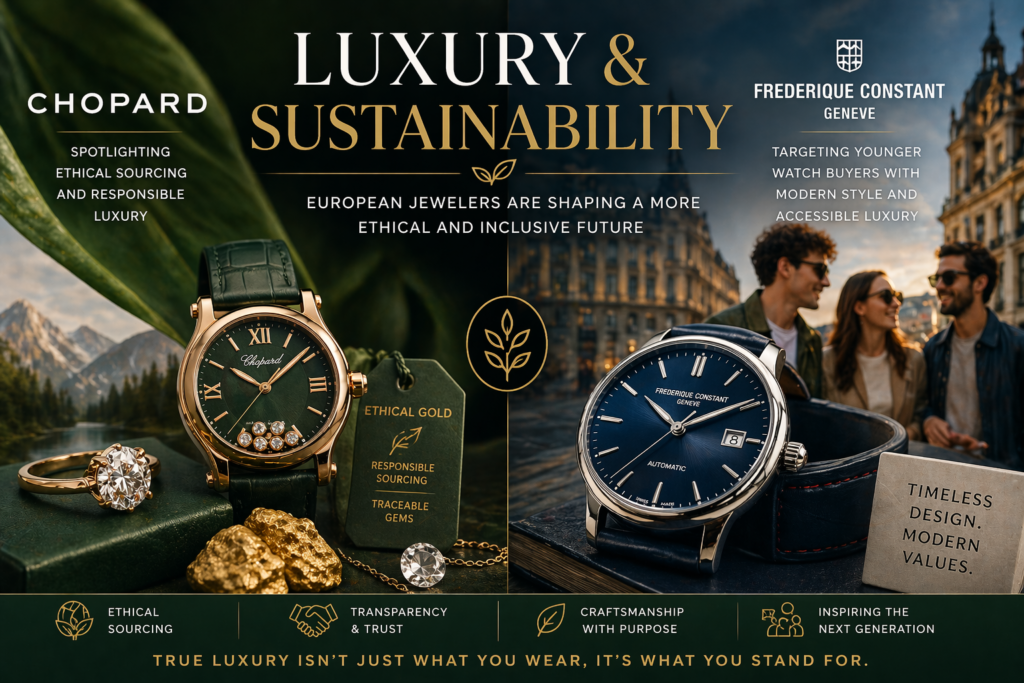
Leading this shift are names like Chopard and Frederique Constant, each carving out a modern identity in an industry built on tradition.
💎 Ethical Sourcing Becomes a Luxury Standard
For decades, the journey of a gemstone—from mine to market—was largely invisible to consumers. Today, that opacity is no longer acceptable.
Chopard has positioned itself at the forefront of ethical luxury, committing to responsibly sourced gold and traceable gemstones. Its sustainability initiatives go beyond marketing, reflecting a broader transformation in consumer expectations:
- Buyers want transparency about where materials come from
- Environmental impact is under increasing scrutiny
- Ethical labor practices are now part of brand value
In this new landscape, luxury is no longer just about rarity—it’s about responsibility.
⌚ A New Generation of Watch Buyers
While sustainability reshapes sourcing, demographics are reshaping demand.
Frederique Constant is targeting younger consumers entering the luxury space for the first time. These buyers—often Millennials and Gen Z—approach luxury differently:
- They seek accessible price points without sacrificing quality
- They value modern design and innovation
- They engage with brands through digital platforms rather than traditional retail
By blending Swiss craftsmanship with affordability and contemporary appeal, Frederique Constant is positioning itself as a gateway into luxury watch ownership.
🌍 The Industry at a Crossroads
These parallel strategies highlight a broader shift across Europe’s luxury sector:
- Sustainability is no longer optional—it’s becoming a baseline expectation
- Brand storytelling matters more than ever, especially around origin and impact
- Younger consumers are driving change, forcing even established maisons to evolve
Luxury brands that fail to adapt risk appearing out of touch in a market that increasingly values ethics alongside elegance.
🔮 Redefining Luxury for the Future
The convergence of sustainability and accessibility is redefining what luxury means in the 21st century. It’s no longer enough to create beautiful objects—brands must also create trust, transparency, and relevance.
Chopard’s focus on ethical sourcing and Frederique Constant’s appeal to younger buyers represent two sides of the same transformation. Together, they signal a future where luxury is:
- More accountable
- More inclusive
- And more aligned with global values
Conclusion
The European luxury industry is not abandoning its heritage—it’s evolving it. Craftsmanship and exclusivity remain essential, but they are now complemented by purpose and progress.
In this new era, true luxury isn’t just defined by what you own—but by what it stands for.