
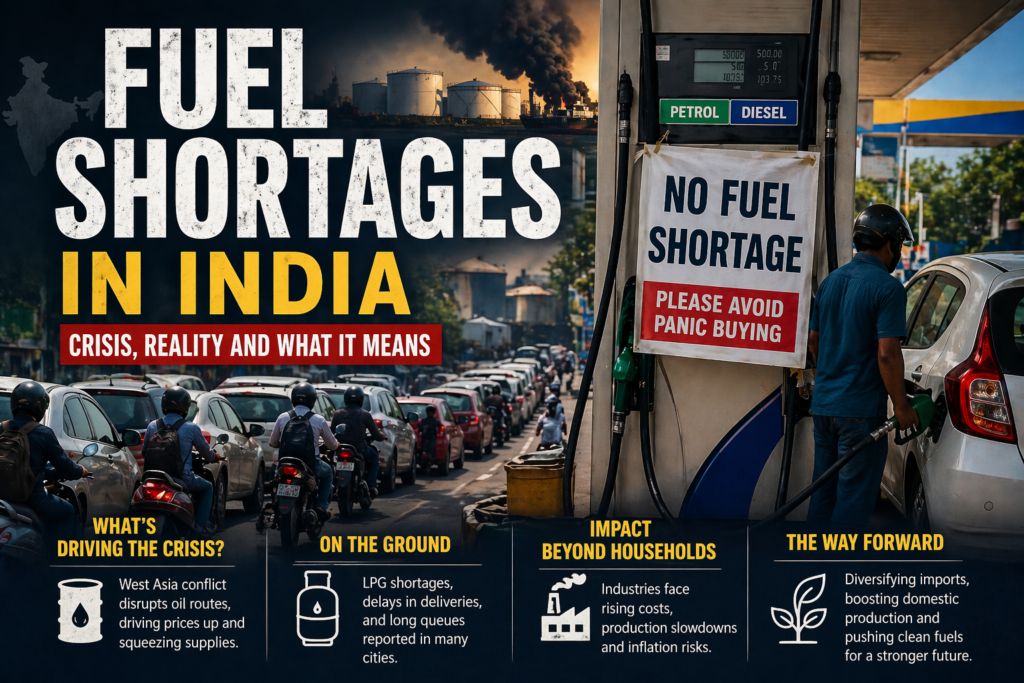
India is facing mounting concerns over fuel availability as global geopolitical tensions disrupt energy supply chains. While officials maintain that the situation is under control, signs of strain are emerging across regions, industries, and households—raising questions about the country’s energy security.
Global Conflict, Local Impact
At the heart of the issue lies the ongoing conflict in West Asia, particularly involving Iran. The instability has affected key oil transit routes such as the Strait of Hormuz, a critical chokepoint through which a significant portion of the world’s crude oil flows.
For India—one of the largest importers of oil—this disruption has immediate consequences. A large share of its crude oil and liquefied petroleum gas (LPG) comes from the region, making the country especially vulnerable to supply shocks and price volatility.
Shortage or Supply Stress?
The Indian government and major fuel suppliers have repeatedly stated that there is no nationwide shortage of petrol or diesel. Strategic reserves remain intact, and supply chains are being actively managed.
However, the situation on the ground tells a more complicated story:
- Localized shortages of LPG have been reported in several cities
- Delays in cylinder deliveries have become more common
- Panic buying in some areas has added pressure to already strained systems
This disconnect between official statements and lived experiences has fueled public concern.
Industries Feeling the Heat
The impact of fuel stress is not limited to households. Several key industries are already feeling the effects:
- Manufacturing units are grappling with rising energy costs
- Small businesses dependent on gas supplies are facing operational disruptions
- Transport and logistics sectors are dealing with fluctuating fuel prices
In some regions, production slowdowns and temporary shutdowns have been reported, highlighting how deeply fuel availability is tied to economic activity.
Rising Prices and Inflation Risks
Even where fuel remains available, affordability is becoming a growing concern. Global crude price fluctuations have led to increased costs for petrol, diesel, and cooking gas.
This has broader economic implications:
- Higher transportation costs are pushing up prices of goods
- Inflationary pressures are building across sectors
- Household budgets are tightening, particularly for lower-income groups
Government Response and Policy Shifts
To stabilize the situation, India is implementing a mix of short-term and long-term measures:
- Diversifying crude oil imports beyond the Middle East
- Increasing domestic production and optimizing distribution
- Encouraging alternative fuels such as ethanol blends
- Promoting energy efficiency and electrification in transport
These steps are aimed not just at managing the current crisis, but also at reducing future dependence on volatile global markets.
A Defining Moment for Energy Security
The current fuel situation could become a turning point for India’s energy strategy. It underscores the risks of heavy reliance on imports and the importance of building resilient, diversified energy systems.
While the country is not yet in the grip of a full-scale fuel crisis, the warning signs are clear. How India responds in the coming months will shape not only its economic stability but also its long-term approach to energy independence.
Conclusion
India’s fuel challenges today are a reflection of a deeply interconnected global energy system. What begins as a geopolitical conflict thousands of kilometers away can quickly translate into higher prices, supply disruptions, and economic stress at home.
The situation remains fluid—but one thing is certain: energy security is no longer just a policy issue; it is a national priority.