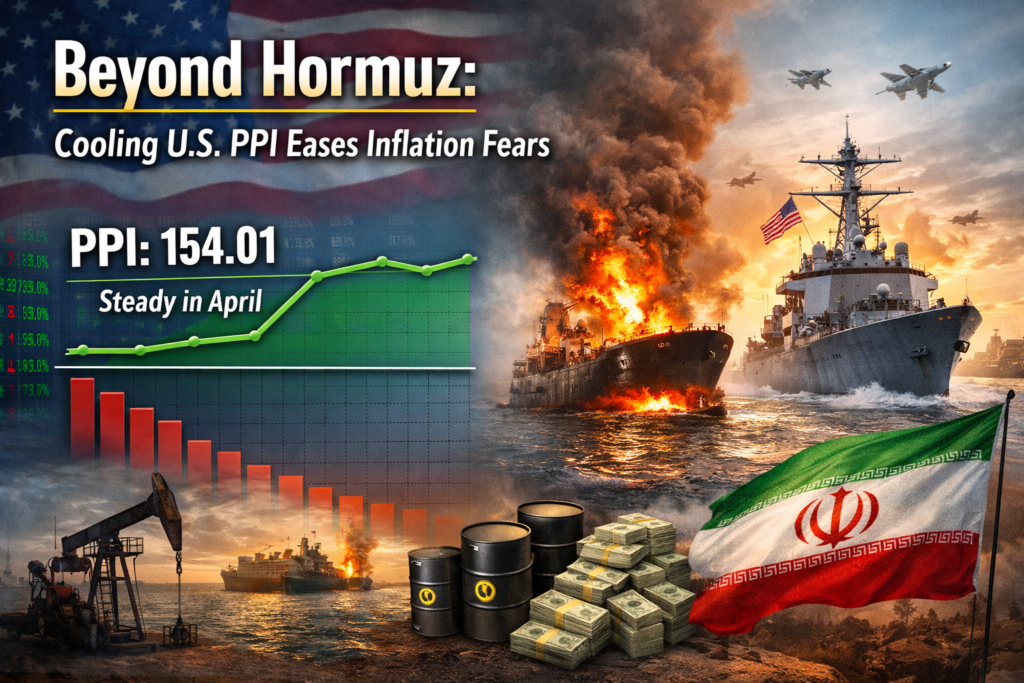
April 2026 has delivered a rare moment of relief for global markets. While geopolitical tensions in the Strait of Hormuz threaten energy supply chains, the latest U.S. Producer Price Index (PPI) data suggests inflationary pressures may be stabilizing, offering investors a temporary reprieve.
📊 Cooling Inflation Signals
The U.S. PPI held steady at 154.01 points in April, unchanged from March and below forecasts of 155.2. This plateau marks a slowdown in producer cost growth, easing fears of runaway inflation. Analysts had expected continued upward momentum, but the data indicates inflationary momentum is cooling, giving the Federal Reserve more breathing room in its policy stance.
🌍 Geopolitical Crosscurrents
On April 13, 2026, U.S. futures plunged after President Trump ordered a blockade of the Strait of Hormuz, a chokepoint for nearly 20% of global oil shipments. Iran’s Revolutionary Guard threatened retaliation, while China issued warnings against U.S. escalation. By April 15, the blockade was fully implemented, disrupting over 90% of Iran’s $109.7 billion annual seaborne trade. Oil markets remain volatile, with traders weighing supply risks against the cooling PPI data.
📈 Market Outlook
| Factor | Short-Term Impact | Longer-Term Outlook |
|---|---|---|
| PPI Cooling | Eases inflation fears | Suggests stabilization in producer costs |
| Hormuz Blockade | Raises oil price volatility | Could reignite inflation if prolonged |
| Investor Sentiment | Mixed—relief from PPI, anxiety over energy | Dependent on diplomatic progress |
⚠️ Risks Ahead
- Energy Shock:
Prolonged disruption in Hormuz could drive oil prices higher, reversing inflation relief. - Diplomatic Uncertainty:
Peace talks scheduled mid-April may ease tensions, but failure could worsen inflation outlook. - Policy Balance:
The Fed must weigh cooling producer costs against potential energy-driven inflation spikes.
✅ Conclusion
The April 2026 PPI data has cooled inflation fears, offering markets a measure of stability. Yet, the Strait of Hormuz blockade looms large, threatening to reignite price pressures if energy supplies remain constrained. For now, investors are caught between relief from domestic inflation signals and anxiety over global geopolitical risks.